Get back on your grind for less
15% off grinds, sausages, & meatballs ends soon
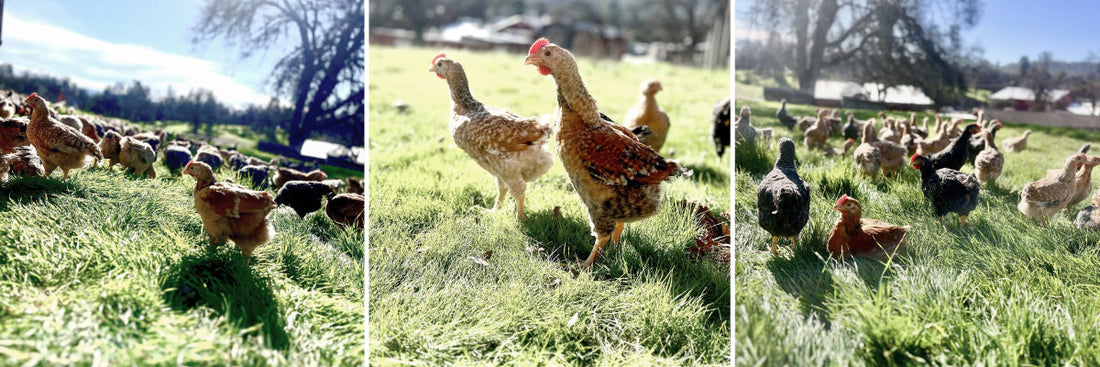
We have a chicken problem in the U.S. It’s the most consumed meat, yet how much do you really know about the chicken you’re eating?
Most grocery store chicken comes from systems that prioritize speed and cost over quality and value. The Result? Meat that lacks flavor, nutrition, and ethical standards – especially relating to animal welfare and land health, standards that are fundamental to Force of Nature.
The chicken problem is one we’ve been committed to solving for some time, and we are finally ready now to launch our revolutionary chicken protocol to the market. If you know us, you know we’re committed to providing meat that is better for you, better for the animals, and better for the planet. Our chicken is no exception.
So let’s break down what makes Force of Nature’s chicken different, and why we’ve built an entirely new supply chain to do our part to fix the chicken industry.
Yes, and our consumers loved it. Despite our support, there are large challenges when competing in a broken, commodity market – and in 2023 our sole supplier shut its doors leading us to rebuild our program from the ground up. Instead of simply replacing what we had, we took the opportunity to raise the bar and deliver an even better chicken to market, while working with more forward-thinking partners in order to enable more resiliency and to impact the industry to a greater degree.
Chicken farming wasn’t always like this. In fact, chicken farming was never even really a thing.
WILD CHICKENS:
The ancestors of today’s chickens, Red Junglefowl, were active, omnivorous birds that thrived in biodiverse, jungle ecosystems and spent their days free and on the move hunting insects and roosting in trees. Since these birds lived the way Mother Nature intended, these birds were a part of regenerative systems.
FARM CHICKENS:
For thousands of years, chickens lived on small farms, eating kitchen scraps and foraging for food, producing nutrient-dense meat and eggs while keeping pests in check. These birds lived in small groups, likely never more than 10-15 on a typical farm. These domesticated chickens kept families and communities fed, and played important roles on farms and homesteads around the world. It’s possible these chickens were also a part of regenerative systems, since their impact on their small farms likely bettered their ecosystems.
INDUSTRIALIZED CHICKEN:
Over time lifestyles changed and populations exploded, changing the way food was produced. For chicken, everything changed in 1948 with the “Chicken of Tomorrow” contest. This contest was meant to find the bird that grew quickly and cheaply. The winner was the Cornish Cross – a breed designed exclusively for fast growth and high yield at the cost of health, welfare and flavor.
Cornish Cross chickens were intentionally bred to be raised indoors, as they are not physically compatible with an active lifestyle. When placed in pastured systems, they often suffer from severe consequences—injuries, difficulty tolerating weather fluctuations, and increased susceptibility to predation. Their bodies are literally bred to sit and eat, not to move freely. When put on pasture, their lack of mobility leads to sores, wounds, and poor overall welfare, making the pasture-raising of Cornish Cross birds an unintended welfare issue.
Today, we consume 350% more chicken compared to the 1940s – and it’s clear massive compromises were made. 99% of chickens come from this one breed, raised indoors on GMO corn and soy, reaching slaughter weight in just five weeks. Their bodies aren’t built to survive beyond that age, and they suffer from poor muscle development, weak bones and major animal welfare issues. These birds live in flocks that are completely unnatural, often numbering more than 25,000 under one roof. And these chickens never touch foot on pasture, and don’t have the ability to roam freely anywhere. This scenario is as far from regenerative as you can get.
The result? A system that prioritizes cheap, fast-growing meat over quality, nutrition, and sustainability.

There is a better way.
1. BREED MATTERS:
Instead of industrial breeds bred for rapid growth and large breast size, we raise slow-growing heritage breeds. These birds:
2. A LIFE OUTDOORS:
Our chickens have the freedom to spend their lives outside with unrestricted pasture access, allowing them to:
We use both stationary and mobile coops, ensuring shelter and safety while keeping birds on fresh, biodiverse land. In both scenarios, our birds are never confined, and have open access to the outdoors. These structures are built for comfort and better emulate the natural environments in which these birds thrive. We even require our ranchers to provide ample food and water outside of barns and coops to ensure chickens are drawn to more natural environments.
3. NO CHEMICAL INPUTS, EVER:
Our protocols prohibit
Instead, we focus on natural immunity and healthy environments, ensuring resilient, strong birds.
In fact, we’re implementing extensive testing on all our proteins to ensure they are free of toxins like glyphosate, and myriad other chemicals that impact land, animal, and human health.
4. A BETTER DIET:
What a chicken eats directly impacts its nutrition—and yours.
Our chickens eat:
The result? Meat that’s higher in protein, healthy fats, and key vitamins and minerals.
5. MORE TIME TO DEVELOP NUTRITION AND FLAVOR:
Most chickens only live about 5 weeks before they fully develop. Our slow-growth chickens mature for much longer in healthier environments allowing:
Stronger immune systems

We don’t think regenerative chicken exists at scale at all today.
Regenerative agriculture restores soil health through responsible animal impact. Our chickens improve the land they live on by fertilizing soil (without over-impacting it) and enhancing biodiversity.
However, because chickens require feed as their main diet source, truly regenerative poultry must also account for the land used to grow their feed. For every one acre of pasture-raised chickens, as much as 40 acres of feed crops are needed. This is a key difference between ruminant animals like beef and bison, who require no supplemental feed and evolved not only to live on grass alone (while being critical for ecosystem health) and monogastric animals like chickens, pigs, and even humans who need a variety of foods to survive. Click to learn more
While we aren’t there yet, we are committed to working toward a truly regenerative poultry model by:
Sourcing organic, regionally attuned feed, which reduces negative environmental impacts chemicals cause in industrial systems.
Encouraging animal, plant, and shrub integration to enhance soil health.
Researching regenerative feed production for long-term sustainability.
Our chicken goes beyond organic standards, but we choose not to certify for two important reasons:
Organic certification wouldn’t change our practices. We already surpass organic requirements for breed, animal welfare, and land management, and our protocols layer on additional, and important differentiators like lifestyle, processing standards, and more.
It would increase costs for our farmers and customers, and make scaling our program more difficult. Instead, we focus on real, measurable improvements that matter.

There’s a lot of good that comes out of raising healthy chickens. When chickens are raised right, they produce healthier, more flavorful meat.
Our chicken is:
Higher in protein
Richer in omega-3s
Packed with vitamins and minerals like A, D, E, iron, selenium, and zinc
By choosing Force of Nature, you’re supporting:
More ethical animal welfare
Healthier, more nutritious food from healthier ecosystems
A system that values land, animals, farmers, and transparency
This is just the beginning. Force of Nature’s chicken is raising the bar for the entire industry—proving that better meat isn’t just possible, it’s necessary.
By choosing Force of Nature, you are supporting a company working to change the feed supply issues that ultimately make the consumption of monogastric animals a less regenerative option.
Try Force of Nature’s chicken today. It’s better for you, the animals, and the planet.
*The Force of Nature difference starts with our protocols, which are specific to each protein we produce. For chicken, our partners agree to (and we then verify in person annually) alignment with our standards around 1) no antibiotic use; 2) diet; 3) chemical use; 4) pasture management, pasture access and coop requirements; 5) breed, age and handling requirements; 6) our regenerative commitment; and 7) our annual Land Steward Index, which is our annual, detailed assessment of their operation and betterment of land, ecosystem health, and animal welfare across many dimensions
16oz Package
16oz Package
3.5-4 lbs


