Get back on your grind for less
15% off grinds, sausages, & meatballs ends soon
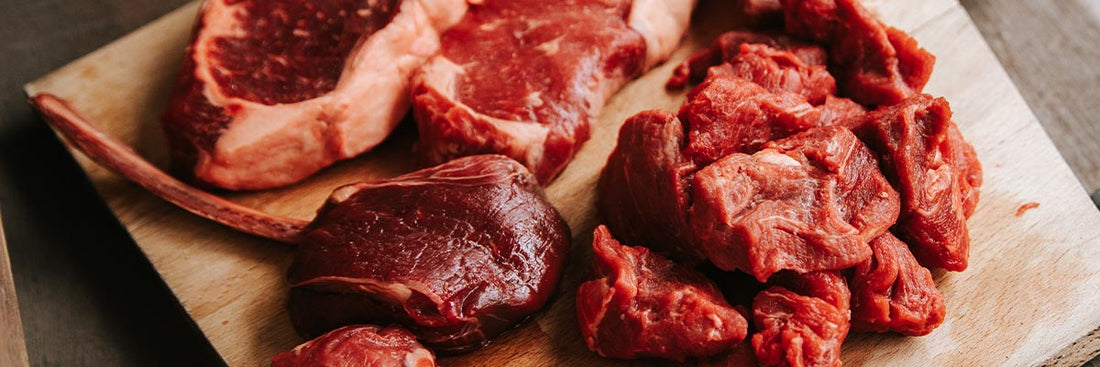
If you’re wondering which meats are keto-friendly, we’ve got some good news for you: almost all of them are.
Plain meat is a naturally carb-free, protein-rich food — making it an ideal fit for the high fat, low carb ketogenic diet.
Some meats also provide numerous other health benefits, especially when the animals are raised in a way that’s in tune with their natural diet, environment, and behaviors.
This guide to the best keto meats reviews what meats you can eat on keto and why, as well as how to choose the highest-quality, healthiest, and most humanely-raised options.
Meat is a great choice on keto, and will likely be a significant part of your diet if you’re on keto.
Protein, found in large quantities in meat, is very filling and helps to reduce appetite and calorie intake while preserving muscle mass.1
Additionally, animal protein is a source of complete protein, meaning it contains all of the amino acids your body needs, in the right ratios, to build new tissues. Most plant proteins are incomplete, so a variety of plant protein sources is required to get all of the necessary amino acids.2
Animal protein is also easier for your body to absorb and utilize than plant proteins — many of which (like beans and legumes) are too high in carbs to be keto-friendly, anyway.2
That said, some of the best keto-friendly animal proteins include:
Still, remember that any unprocessed meat is naturally free of carbs. In addition to the keto meats list above, this includes other types of fish, shellfish, lamb, wild game, duck, turkey, and more.
While most meats are keto-friendly, there are some that should be avoided due to their high carbohydrate count. These include:
While carb count is the most critical determining factor for a meat’s keto-friendliness, there are some other important factors you may want to consider. These include other aspects of nutrition, as well as flavor, price, and environmental or animal welfare concerns.
At Force of Nature, we offer high-quality meats that are raised with regenerative methods. Our meat is better for you and better for the planet. Explore our products.
Grass-fed beef is an ideal meat for keto eaters. It’s a little bit leaner than conventionally-farmed beef, and has a brighter, cleaner taste. There are also so many different cuts to choose from.
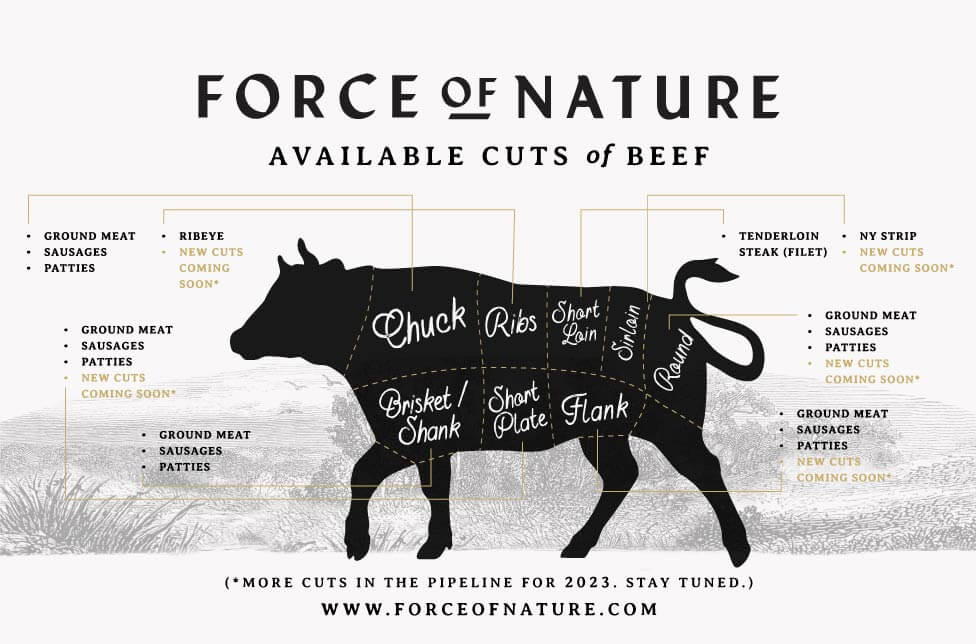
Ground beef is great for quick, weeknight meals, while roasts can be slow-cooked, braised, or smoked on the weekends. Steak cooks quickly, but always makes for an impressive and satisfying meal.
With the variety of cuts you can get from a cow, there are also several options at many different price points.
Grass-fed beef is also extremely nutritious. A 100-gram serving of grass fed ground beef contains9:
In addition to being rich in protein, beef contains significant amounts of several essential nutrients. A single serving contains nearly a day’s worth of vitamin B12, which your body needs for nerve function and red blood cell production.10
It’s also a good source of easy-to-absorb iron. Your body can absorb up to 30% of the iron from animal sources, and only up to 10% of the iron from plant sources.11
Compared to conventionally-farmed beef, grass-fed beef is also slightly higher in anti-inflammatory omega-3 fats.12
Finally, it’s worth mentioning that beef liver — sometimes known as “nature’s multivitamin” — is a fantastic source of several nutrients, even more so than beef muscle meats.13
Grass is a natural diet for ruminant animals like cows, so grass-fed cows tend to be healthier — resulting in higher quality, better-for-you meat.8
Additionally, grass-fed cows play a huge role in soil regeneration. They fertilize the soil, replenishing it with nutrients so that it can grow healthy plants.8
Force of Nature's Regenerative Beef Ancestral Blend contains beef liver and beef heart blended in high quality, grass-fed beef. It provides the benefits of organ meat in a delicious, easy-to-cook format that your family will love in burgers, meatballs, or tacos. Learn more.
Not happy with the strange texture and disappointing flavor of chicken from the grocery store? These birds are selectively bred to grow very large, very fast, and the meat often contains added water to plump it up even further. The result is chicken that tastes and feels just a little bit “off.”
Our chickens grow at their natural pace and roam freely in the outdoors and pluck and scrape at the ground for insects and forage — resulting in more natural, better-tasting, and better-textured meat.
Whole chickens and bone-in cuts can save you some money over boneless or skinless cuts, too — and you can save the bones to make homemade bone broth.
As far as lean protein goes, chicken is an excellent source. A 100-gram serving of ground chicken contains19:
Chicken is naturally higher in omega-6 fats than other meats, so you may not necessarily want to make it the only meat you consume. Fortunately, though, pasture-raised chicken has a higher ratio of anti-inflammatory omega-3 fats to balance out its omega-6 content.20,21
It’s also a good source of potassium, an important electrolyte that may be helpful for preventing cramps on keto, and choline — which is necessary for energy metabolism and nervous system function.22,23
Unfortunately, factory farmed chickens are subject to abhorrent living conditions, and factory chicken farming operations are a significant source of pollution.24
However, organic-fed, pasture-raised chickens are less stressed than factory farmed chickens, living in cleaner environments with more outdoor access and a more natural diet.25,26
Force of Nature chickens are free to range, with unlimited access to the outdoors to forage on grubs, bugs, and grass, in addition to all-organic feed. The result is healthier chicken meat with a more robust nutrition profile and a better taste than conventional chicken. Learn more.
When you think of a juicy cut of red meat, bison may not be one of the first to come to mind. Still, it’s an excellent source of keto-friendly protein with a taste that’s very reminiscent of beef — just much leaner. One perk of this leanness is that bison cooks up about three times faster than beef.
They’re also massive beasts — so there are a huge variety of bison cuts available at different price points, too.

A 100-gram serving of ground bison contains27:
If you’re trying to lose weight with keto, bison may be an excellent choice to keep in your freezer. While providing similar nutrient density and outstanding protein content as beef, it’s lower in fat. Although keto is a high fat diet, keeping your fat intake in check can actually make it easier to burn body fat stores.
Bison is also rich in iron and vitamin B-12, as well as niacin and zinc — both of which are necessary for energy metabolsim.28,29
Before cows were brought over from Spain in the 1400s, bison were the original ruminant animals roaming the American plains.30,31 Their role was a significant one — grazing on wild grasses and leaving rich, fertile soil in their wake as they migrated. That makes bison uniquely suited to regenerative agriculture practices, even today.
Our Regenerative Bison Ribeye Steak provides over 60 grams of protein and 100% of the daily value for iron per package, making it ideal for a filling keto steak dinner. Learn more.
When you want a little surf instead of all the turf, salmon is a great choice. It has a fairly mild fish flavor, and even whole filets cook fairly quickly.
Additionally, canned salmon or salmon filets are great to keep on hand for quick weeknight dinners, and grilled or roasted whole salmon filets make a show-stopping entree.
A 100-gram serving of canned salmon, drained, provides32:
Salmon is a great source of protein, and it’s also rich in omega-3 fatty acids. These fats have anti-inflammatory properties and may also be helpful for brain and heart health.33
Canned salmon is also a good way to boost your calcium intake. It contains small bones that are softened when the salmon is processed, making them indistinguishable in texture from the meat.
Although farmed salmon technically still reside in the ocean, wild-caught salmon is a better choice. Wild caught fish eat a more species-appropriate diet, and their meat contains fewer environmental contaminants than farmed fish.34 Salmon farming may also negatively impact ocean ecosystems where these operations are located.35
Pasture-raised pork comes from pigs that are allowed to roam freely in their natural habitat of fields and forests, and so they may develop more muscle — resulting in a different (and according to many, better) flavor than factory farmed pigs.14
Pork is also used to make many of our favorite fatty breakfast meats, like bacon and sausage — which you’re free to enjoy on keto thanks to their low carb count and high fat content.
Additionally, research shows that pastured pork is richer in anti-inflammatory omega-3 fat than conventionally-farmed pork.15,16
Here’s what in a 100-gram serving of ground pork17:
On keto, B-vitamins can be a concern since many people meet their B-vitamin needs through fortified grain foods which aren’t keto-friendly. However, pork is a good source of several of the B vitamins your body needs to convert food into usable energy for your cells.18
Pastured pigs are able to develop natural muscles and engage in foraging behaviors, so they’re healthier and happier than conventionally farmed pigs. They also can eat food scraps that would otherwise be thrown away, cutting down on food waste. Like grass-fed cows, pigs who are allowed to roam, graze, and wallow freely are likely a net positive to the environment they live in.8
Our verified Regenerative Ground Pork is loaded with flavor. These heritage-breed hogs are raised on pasture year-round, where they wallow, eat bugs, and graze on grass and roots. Learn more.
Nearly all minimally processed meats are good sources of keto-friendly protein, including beef, chicken, fish, shellfish, pork, turkey, bison, and lamb. A 100-gram serving of these meats typically contains 17-21 grams of protein.Fattier cuts, like bacon and sausage, are lower in protein than leaner cuts.
The best meats for weight loss on keto include beef, pork, chicken, bison, and salmon. All of these meats are free of carbs, rich in protein, and versatile. Choosing leaner cuts may make it easier to burn excess stored body fat while on keto.
It depends on your approach to keto and your goals. Some people allow themselves to eat unlimited quantities of keto-friendly foods. Others measure their portion sizes and track their calorie and carb intake. Generally, tracking or limiting your food intake and calories may work better if you’re trying to lose weight.
However, meat is naturally very filling. Even if you do allow yourself to eat unlimited quantities, you may find that you can’t eat as much as you thought.
Processed meats, like lunch meats, sausage, hot dogs, and bacon, are generally made using highly processed additives like nitrates and nitrites. High processed meat intake has been linked to some cancers, but the evidence to support this link isn’t very strong.36
Also, quality matters. There are many higher-quality processed meats made with natural ingredients, like Force of Nature hot dogs, sausages, and bacon.
Cold meats that are keto-friendly include most deli meats, like sliced turkey, ham, and roast beef. Most cold cuts and keto deli meats contain additives to extend their shelf life, so they may have small amounts of carbs.
Naturally, most meats are completely carb-free. However, meats that have been processed (like hot dogs) or meats that contain added ingredients like marinades or breading, will often contain varying amounts of carbs.
Some of the best meats for keto include beef, pork, chicken, salmon, and bison. Still, all plain, unprocessed meats are keto-friendly and low in carbs — so there are plenty of options to choose from.
However, you may want to choose your meats based on other factors in addition to carb count.
Regeneratively-raised animals — like grass-fed beef and bison, as well as pastured pork and chicken — lead happier, less-stressed, closer-to-nature lives.
These qualities are reflected in the taste and improved nutrient profiles of the meat they provide. In addition to being keto-friendly, these meats are better for your health and better for the environment.


